

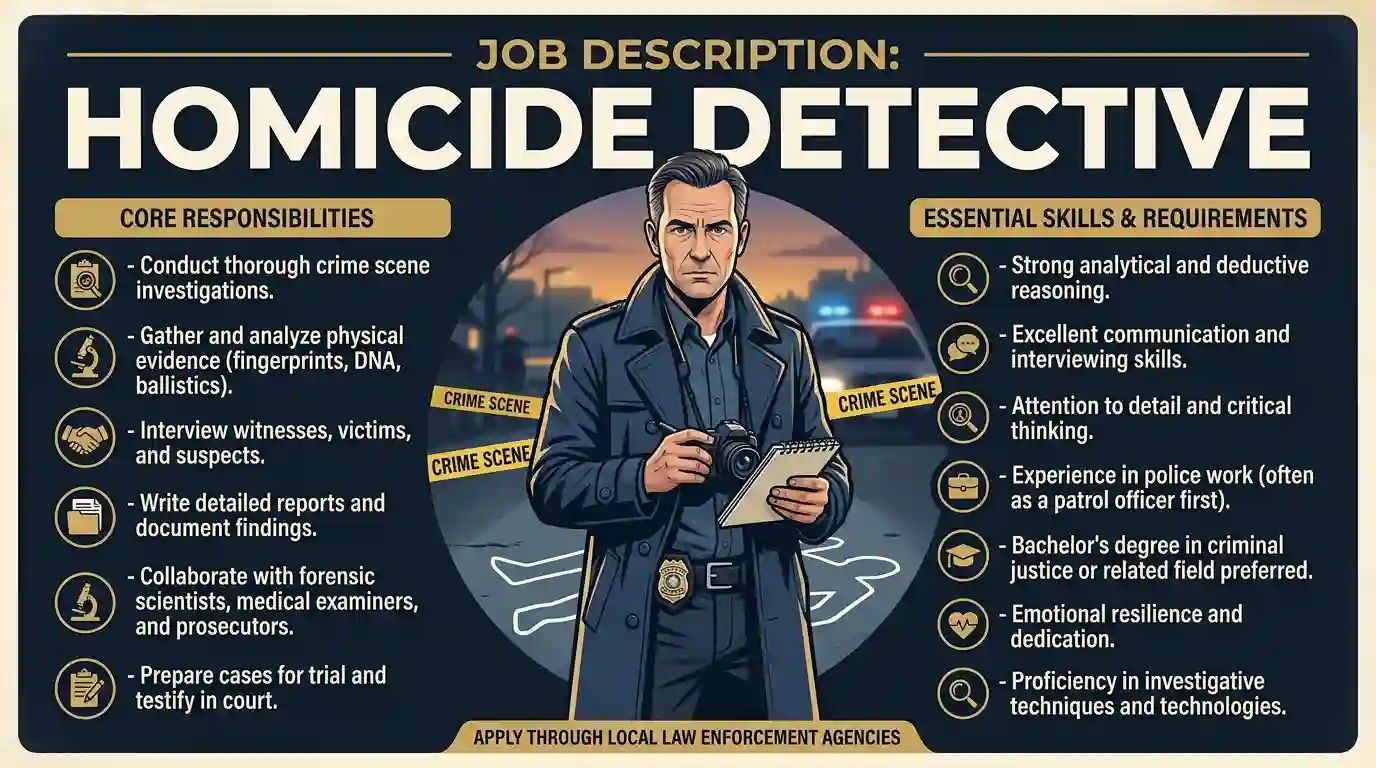
A homicide detective investigates deaths that may have been caused by another person. The job is to find out what happened, collect evidence, talk to witnesses, question suspects, and help solve the case.
Homicide detectives may work with police officers, forensic scientists, crime scene investigators, prosecutors, and other law enforcement professionals. They may also appear in court and explain what they found during an investigation.
This homicide detective job description explains the main duties, skills, requirements, training, work environment, career path, salary, job outlook, and daily work of a homicide detective.
Homicide Detective Job Overview
A homicide detective is a law enforcement professional who investigates suspected criminal deaths. The main goal is to find facts and evidence that can help explain what happened.
A detective may visit a crime scene, speak with witnesses, interview the victim’s family, question suspects, review records, and work with forensic teams.
The job requires careful thinking, good communication, strong observation, patience, and attention to detail.
Homicide Detective Job Responsibilities
The main responsibility of a homicide detective is to investigate suspected homicide cases.
Common responsibilities include:
- Investigating homicide cases
- Securing and examining crime scenes
- Collecting and protecting evidence
- Interviewing witnesses
- Speaking with victims’ families
- Questioning suspects
- Checking criminal history
- Reviewing police reports
- Conducting background research
- Following leads
- Working with forensic scientists
- Working with crime scene investigators
- Writing investigation reports
- Preparing evidence for court
- Working with prosecutors
- Giving courtroom testimony when needed
- Reviewing cold cases
- Keeping case records up to date
A homicide detective must look at facts carefully. Even a small piece of information may become important later.
Homicide Investigation Process
A homicide investigation can have many steps. The exact process can vary by police department, case, and local law.
1. Responding to the Crime Scene
The investigation may begin when police receive a report of a suspicious death.
Police officers may arrive first. A homicide detective may then be called to help with the investigation.
2. Securing the Crime Scene
The crime scene must be protected so important evidence is not lost, damaged, or changed.
Detectives and crime scene investigators may work together to protect the area.
3. Examining the Crime Scene
Detectives carefully study the scene. They may look at objects, locations, photographs, videos, and other details that may help the investigation.
4. Collecting Evidence
Evidence can help detectives understand what happened.
It may include:
- Fingerprints
- DNA evidence
- Blood traces
- Clothing
- Photographs
- Digital records
- Security camera footage
- Documents
- Physical objects
- Witness statements
Evidence must be collected and handled according to proper procedures.
5. Interviewing Witnesses
Detectives may talk to people who saw or heard something related to the case.
They may interview:
- Witnesses
- Family members
- Friends
- Neighbors
- Coworkers
- Other people connected to the victim
Good interview skills help detectives collect useful information.
6. Questioning Suspects
Detectives may question people who could have information about the death.
They compare what suspects say with other evidence and information from the investigation.
7. Checking Background Information
A detective may research a person’s background and criminal history when it is relevant to the case.
This can help investigators understand relationships, past events, and possible links between people.
8. Working With Forensic Teams
Some evidence needs special testing.
Homicide detectives may work with forensic scientists and crime scene investigators. Depending on the case, forensic work may include DNA, fingerprints, forensic chemistry, or other scientific evidence.
9. Building the Case
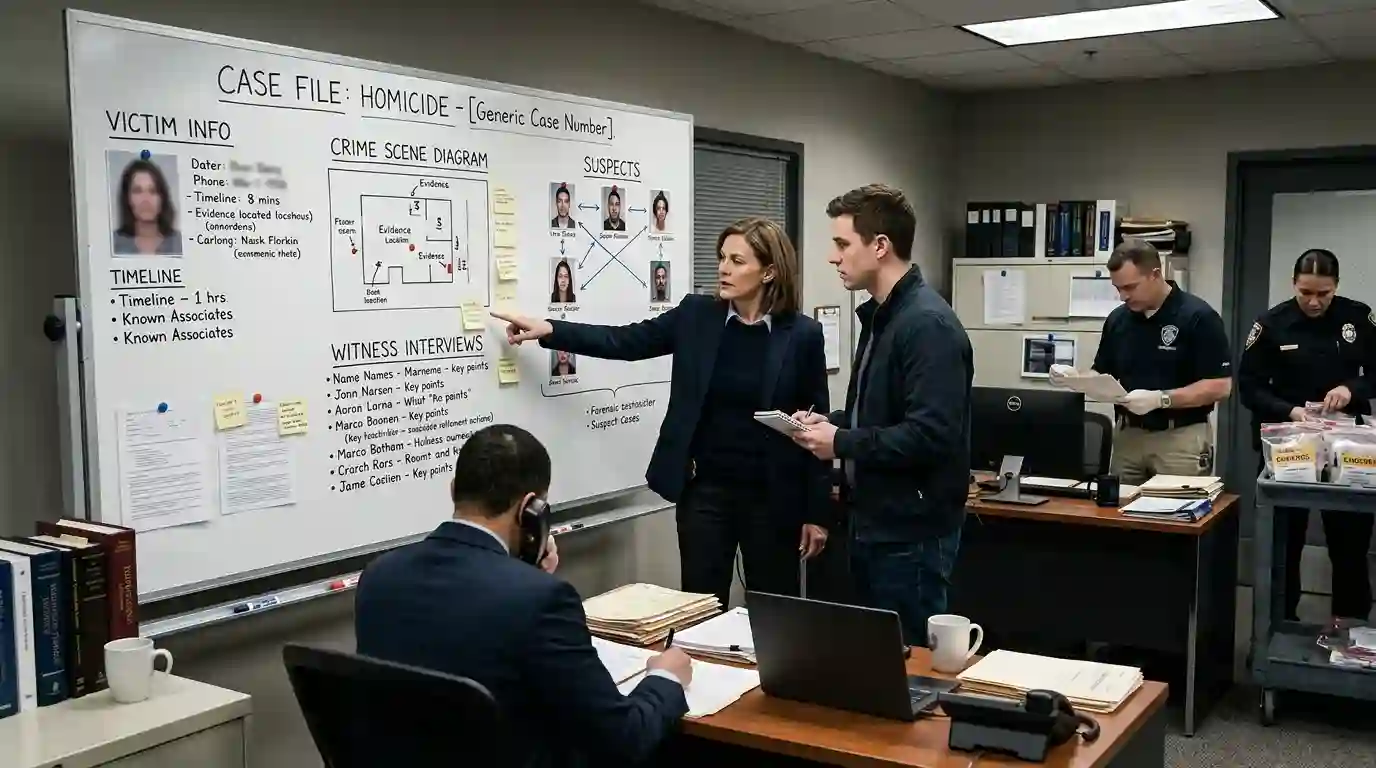
Detectives bring information from different sources together. They compare evidence, witness statements, records, and timelines.
The goal is to understand what happened based on facts and evidence.
10. Working With Prosecutors
When appropriate, detectives may work with prosecutors during a criminal case.
They may provide reports, evidence, and information gathered during the investigation.
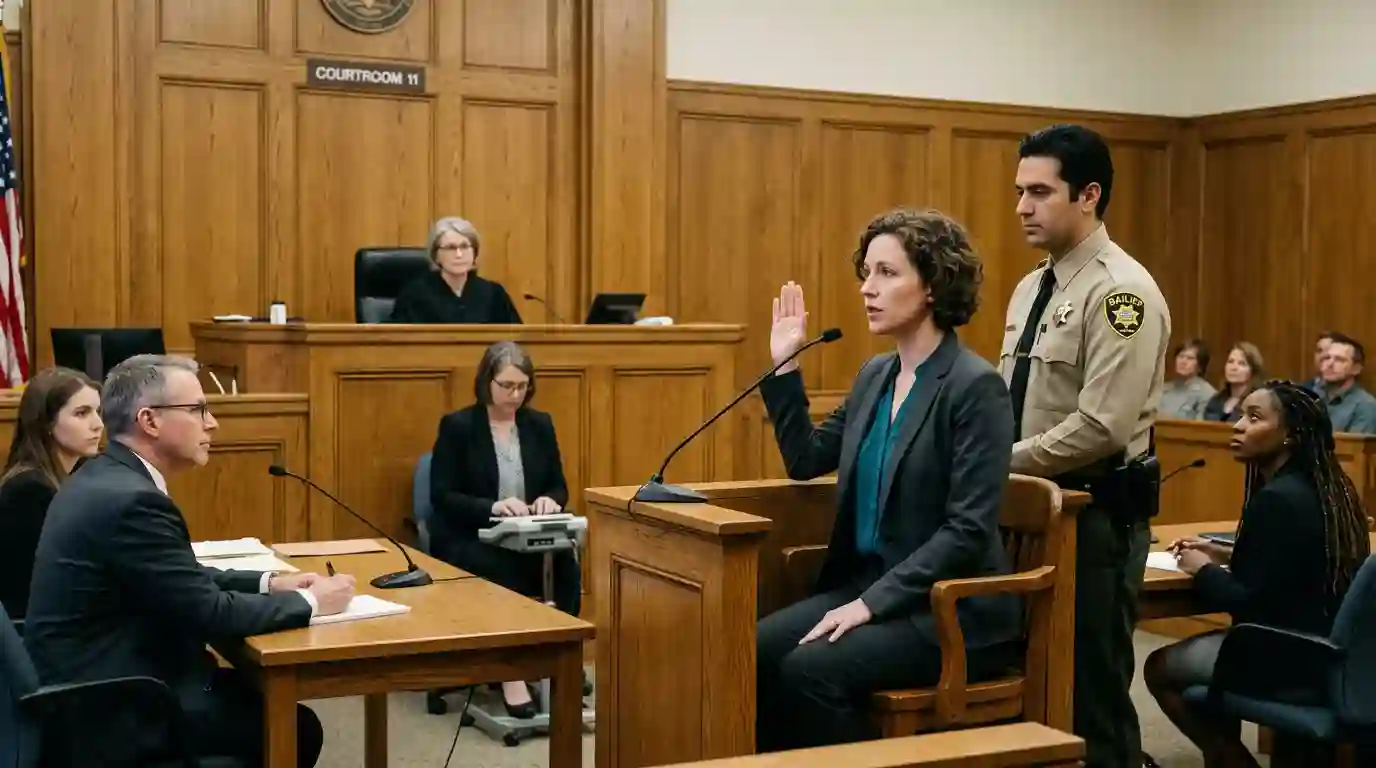
11. Courtroom Testimony
A homicide detective may be called to court.
The detective may explain:
- How the investigation started
- What evidence was found
- Who was interviewed
- What investigative steps were taken
- How evidence was handled
The detective must give clear and truthful information.
What Does a Homicide Detective Do Every Day?
There is no single daily routine for every homicide detective.
One day may include office work, while another may involve a crime scene or interviews.
A typical day may include:
- Reviewing an active case
- Checking new evidence
- Interviewing witnesses
- Talking with other officers
- Meeting with forensic specialists
- Reviewing video or records
- Conducting background research
- Writing reports
- Following new leads
- Meeting with prosecutors
- Preparing for court
Some investigations can take days, while complex cases may take much longer.
Where Do Homicide Detectives Work?
Homicide detectives usually work for law enforcement agencies that investigate serious crimes.
They may work in:
- Police departments
- County law enforcement agencies
- State law enforcement agencies
- Homicide units
- Cold case homicide units
- Criminal investigations divisions
- Other government law enforcement agencies
Their work may take place in police offices, crime scenes, courts, laboratories, and other locations related to an investigation.
Types of Homicide Cases
Homicide detectives may investigate different types of cases involving suspected criminal deaths.
These can include:
- Murder
- Manslaughter
- Suspicious deaths
- Unattended deaths
- Officer-involved shootings
- In-custody deaths
- Arson-related deaths
- Domestic homicide
- Gang-related homicide
- Multiple-victim cases
- Child homicide
- Unsolved homicides
- Cold case homicides
The exact cases handled by a detective depend on the agency and its jurisdiction.
What Is a Cold Case?
A cold case is a criminal investigation that has remained unsolved for a long time.
A detective may review:
- Old police reports
- Previous interviews
- Old evidence
- DNA evidence
- Witness information
- Criminal records
- New leads
New evidence or improved technology can sometimes give investigators another way to examine an old case.
Homicide Detective Skills
A homicide detective needs many skills to handle complex investigations.
Important skills include:
- Critical thinking
- Observation
- Communication
- Interviewing
- Problem-solving
- Evidence analysis
- Research
- Report writing
- Time management
- Teamwork
- Patience
- Attention to detail
- Decision-making
- Stress management
Detectives also need to stay calm when dealing with difficult cases.

Hard Skills
Hard skills are practical skills used during investigations.
These may include:
- Crime scene investigation
- Evidence collection
- Evidence handling
- Evidence analysis
- Criminal investigation
- Interview techniques
- Suspect interrogation
- Report writing
- Background research
- Criminal history research
- Case management
- Police procedures
- Court procedures
- Law enforcement technology
Soft Skills
Soft skills are also important because detectives work with many different people.
Useful soft skills include:
- Good communication
- Active listening
- Patience
- Emotional control
- Teamwork
- Critical thinking
- Problem-solving
- Observation
- Empathy
- Good judgment
- Mental strength
- Professional behavior
A detective should be able to communicate clearly with witnesses, families, police officers, prosecutors, and other professionals.
Working With Forensic Scientists
Forensic science can be an important part of homicide investigations.
Forensic scientists may examine evidence collected during an investigation. Depending on the case, this can include DNA, fingerprints, bodily fluids, or other physical evidence.
A homicide detective does not normally perform every forensic test. Instead, the detective may work with trained forensic professionals who examine the evidence and provide their findings.
Crime Scene Investigation
Crime scene investigation is another important part of homicide work.
Crime scene investigators may document the scene, take photographs, collect evidence, and help protect the evidence.
The detective uses this information along with witness statements, reports, and other facts to understand the case.
Homicide Detective Requirements
Homicide detective requirements can be different for each law enforcement agency.
Many agencies may require applicants to:
- Meet age requirements
- Complete required education
- Become a police officer
- Complete police academy training
- Gain law enforcement experience
- Meet background requirements
- Complete required exams or assessments
- Complete detective training
- Develop investigation skills
In many agencies, a person does not become a homicide detective immediately after school. They often start as a police officer and gain experience first.
Education and Degree Options
A college degree may help someone who wants a career in criminal investigations.
Common study areas include:
- Criminal justice
- Criminology
- Forensic science
- Police science
- Psychology
- Sociology
- Justice administration
- Criminal administration
The exact education requirements depend on the agency.

Homicide Detective Training
Homicide detective training can include police academy training, field experience, investigative courses, and specialized training.
Training may cover:
- Criminal investigation
- Crime scene investigation
- Evidence collection
- Interviewing
- Interrogation
- Criminal law
- Report writing
- Police procedures
- Court procedures
- Forensic evidence
- Case management
Detectives may continue learning throughout their careers.
How to Become a Homicide Detective
Becoming a homicide detective usually takes several steps.
Step 1: Complete Your Education
Complete the education required by the law enforcement agency where you want to work.
Step 2: Become a Police Officer
Many homicide detectives begin their careers as police officers.
This gives them experience with law enforcement, crime scenes, public safety, and criminal cases.
Step 3: Gain Experience
Officers often gain experience before moving into detective work.
Step 4: Build Investigation Skills
Learn how to interview people, examine evidence, write reports, research cases, and solve problems.
Step 5: Become a Detective
Qualified officers may apply for detective positions when openings are available.
Step 6: Move Into Homicide Investigation
After becoming a detective, an officer may later join a homicide unit or another specialized investigation unit.
Homicide Detective Career Path
The homicide detective career path can vary by agency.
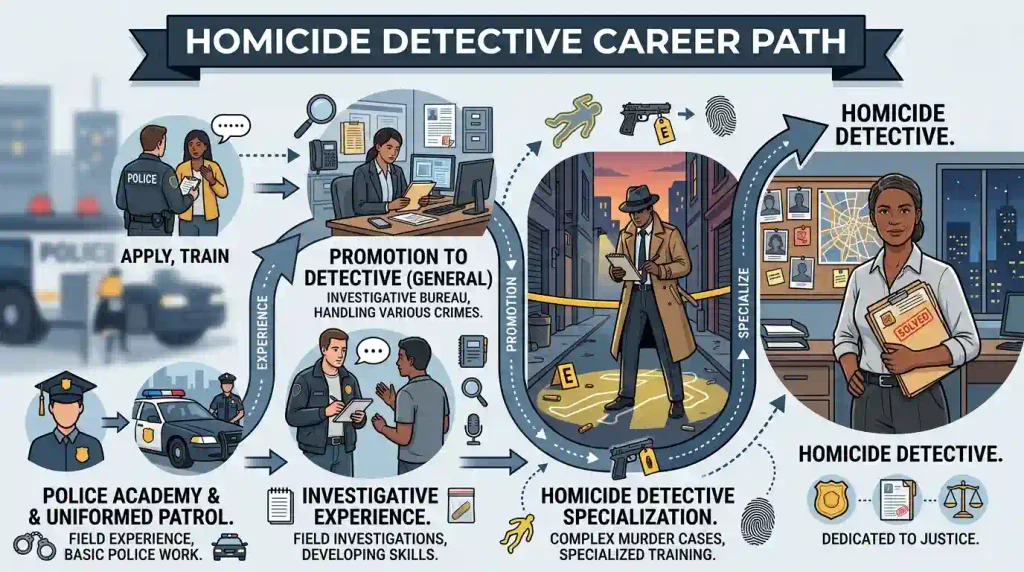
A common path may look like this:
Police Officer → Experienced Officer → Detective → Homicide Detective → Senior Detective or Supervisor
Some officers may work in other areas first, such as robbery, assault, property crime, or special investigations.
Experience, training, performance, and available positions can affect career growth.
Homicide Detective vs Criminal Investigator
A homicide detective is a type of criminal investigator, but job titles can vary between agencies.
A homicide detective mainly focuses on suspected criminal deaths.
A criminal investigator may work on many types of crimes, such as:
- Theft
- Fraud
- Assault
- Drug crimes
- Property crimes
- Violent crimes
- Homicide
- Financial crimes
- Cybercrime
The main difference is the type of cases they investigate.
Other Investigation Units
Law enforcement agencies may have different investigation units.
Examples can include:
- Homicide Unit
- Cold Case Unit
- Special Victims Unit
- Vice Unit
- Cybercrime Unit
- Drug Enforcement Unit
- Financial Crime Unit
- Missing Persons Unit
- Property Crime Unit
- Special Investigations Unit
A detective may work in one unit before moving to another.
Homicide Detective Jobs
Homicide detective jobs are normally found through law enforcement agencies.
People looking for these jobs can check:
- Police department career pages
- County law enforcement websites
- State agency websites
- Government job websites
- Official recruitment notices
Some agencies may use titles such as detective, criminal investigator, or homicide investigator instead of homicide detective.
Homicide Detective Jobs Near Me
People searching for homicide detective jobs near me should start with official law enforcement websites in their area.
Useful searches can include:
- Homicide detective jobs
- Police detective jobs
- Criminal investigator jobs
- Detective jobs
- Law enforcement jobs
Checking related job titles can help because agencies do not always use the same title.
Homicide Detective Job Outlook
The homicide detective job outlook can depend on location, agency budgets, hiring needs, retirements, and available positions.
Job opportunities can also change as police departments and other law enforcement agencies change their staffing needs.
People interested in this career should check current job openings and official employment information for their area.
Homicide Detective Salary
Homicide detective salary can vary based on:
- Location
- Agency
- Experience
- Rank
- Overtime
- Work schedule
- Benefits
A detective with more experience may earn more than someone who is new to investigative work.
Salary can also differ between cities, counties, states, and other law enforcement agencies.
How Much Does a Homicide Detective Make Per Hour?
How much does a homicide detective make per hour? It depends on the detective’s yearly salary, work schedule, overtime, location, and other pay factors.
An hourly rate can be estimated from annual pay, but actual earnings may be different when overtime and other payments are included.
Homicide Detective Work Environment
The work environment can change from day to day.
A detective may spend time:
- In a police office
- At a crime scene
- In an interview room
- In a forensic laboratory
- In a courtroom
- At meetings
- Reviewing case records
Some cases may require long or unusual work hours.
Challenges of Being a Homicide Detective
Homicide investigation can be difficult and stressful.
Common challenges include:
- Seeing disturbing crime scenes
- Working long hours
- Handling serious cases
- Dealing with emotional situations
- Speaking with grieving families
- Managing large amounts of information
- Working under pressure
- Appearing in court
- Handling unsolved cases
Mental strength, teamwork, professional training, and support can help detectives manage these challenges.
Homicide Detective Job Summary
A homicide detective investigates suspected criminal deaths. The job includes examining crime scenes, collecting evidence, interviewing witnesses, questioning suspects, reviewing records, working with forensic scientists, writing reports, and preparing cases for court.
The job requires strong communication, critical thinking, observation, patience, problem-solving, and attention to detail.
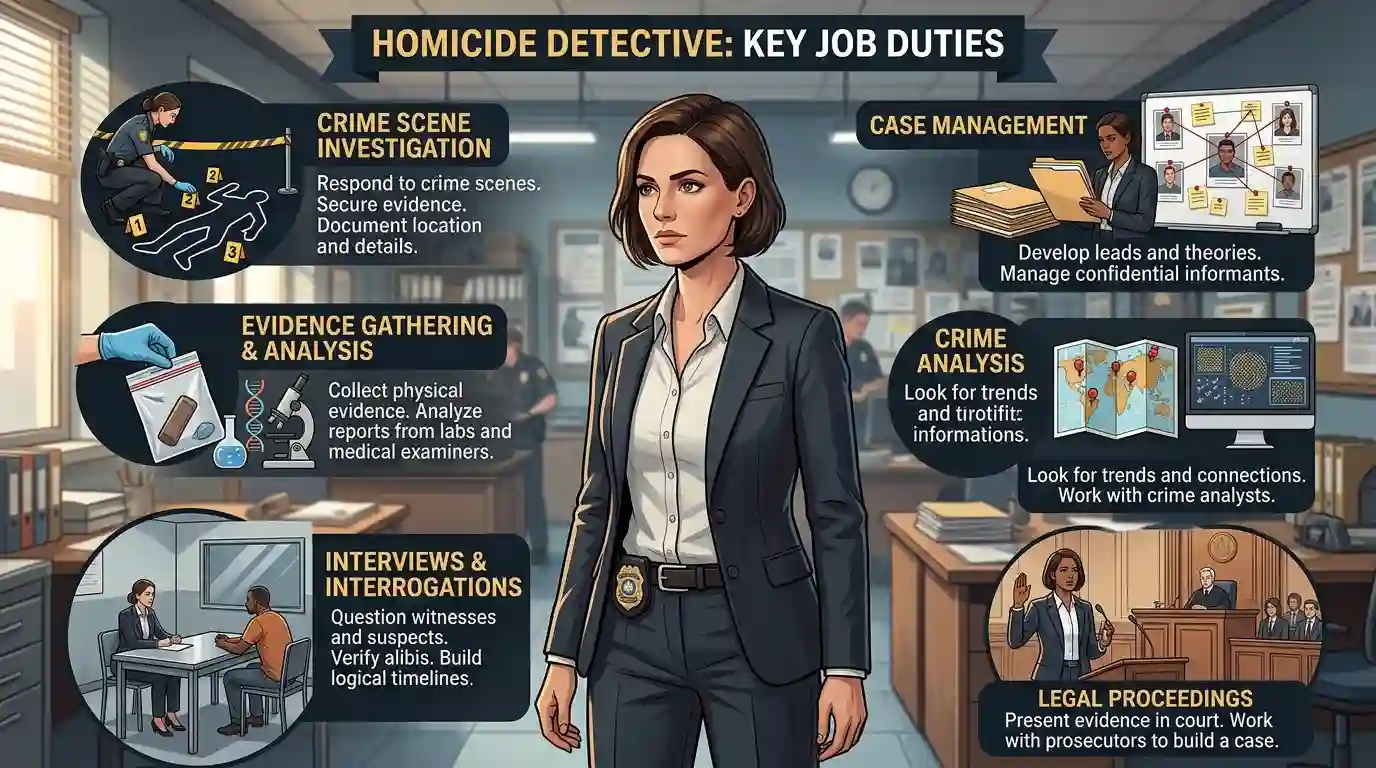
Homicide Detective Job Description: Key Duties
The key duties of a homicide detective include:
- Investigating suspected homicides
- Examining crime scenes
- Collecting and reviewing evidence
- Interviewing witnesses
- Questioning suspects
- Working with forensic professionals
- Researching case information
- Writing investigation reports
- Working with prosecutors
- Preparing for court
- Giving testimony when required
Homicide Detective Description of Job
A simple homicide detective description of job is:
A homicide detective investigates suspected criminal deaths, gathers evidence, interviews witnesses, questions suspects, works with forensic professionals, prepares reports, and may testify in court.
The exact duties can depend on the police department, type of case, and local laws.
Homicide Detective Job Details
The homicide detective job details can change depending on the agency and level of experience.
Some detectives spend more time in the office reviewing evidence and writing reports. Others may spend more time at crime scenes, interviewing witnesses, or preparing for court.
The work can also include cold cases and long investigations that require careful research.
Detective Jobs in Pakistan
People searching for detective jobs in Pakistan may find different job titles and requirements.
The exact title “homicide detective” may not be used by every agency. People may also search for:
- Detective jobs
- Criminal investigator jobs
- Investigation officer jobs
- Law enforcement jobs
- Police jobs
Applicants should check official recruitment notices for the exact requirements of each position.
Homicide Detective Meaning in Urdu
The meaning of homicide detective in Urdu can be explained as:
Homicide Detective = قتل کے مقدمات کی تفتیش کرنے والا افسر
A homicide detective investigates suspected criminal deaths. The detective collects facts, studies evidence, talks to witnesses, and helps determine what happened.
Frequently Asked Questions
A homicide detective investigates suspected criminal deaths. They examine crime scenes, collect evidence, interview witnesses, question suspects, write reports, and may testify in court.
Requirements depend on the agency. Many agencies require law enforcement experience, training, education, background checks, and other qualifications.
Many people first become police officers. They gain experience, become detectives, build investigation skills, and later move into homicide investigation.
They usually work for police departments and other law enforcement agencies. Their work may take place at offices, crime scenes, courts, laboratories, and other investigation locations.
Important skills include critical thinking, observation, communication, interviewing, evidence handling, report writing, patience, teamwork, and problem-solving.
Yes. Some detectives work on cold cases by reviewing old reports, evidence, witness information, and new leads.
A homicide detective mainly investigates suspected criminal deaths. A criminal investigator may investigate many different types of crimes.
There is no single timeline. It depends on education, police experience, training, detective openings, and the requirements of the agency.
The outlook can vary by location and agency. Hiring needs, retirements, budgets, and available positions can affect opportunities.
Hourly pay depends on annual salary, location, experience, overtime, and the agency. Actual pay can vary between law enforcement departments.
Yes. Check official police department, county, state, and government career websites. Also search for detective and criminal investigator positions because job titles can differ.
Homicide detective can be explained in Urdu as قتل کے مقدمات کی تفتیش کرنے والا افسر.
Final Thoughts
A homicide detective has an important role in investigating suspected criminal deaths. The job involves much more than visiting a crime scene. Detectives collect evidence, interview witnesses, question suspects, review records, work with forensic scientists, prepare reports, and may appear in court.
For someone interested in this career, learning about the homicide detective job description, responsibilities, skills, requirements, training, career path, salary, and job outlook can help them understand what this profession involves.
